
Long Covid
Long COVID (also called post-COVID conditions) is a chronic, multisystem illness that can follow SARS-CoV-2 infection. It shows up in hundreds of ways—from crushing fatigue and brain fog to shortness of breath, POTS-like symptoms, and nerve pain. Vaccination usually lowers the overall risk of Long COVID, but can also cause Long Covid or rare vaccine-related adverse events (like myocarditis) which sometimes leave lasting symptoms. Evidence is still evolving—both for causes and treatments.
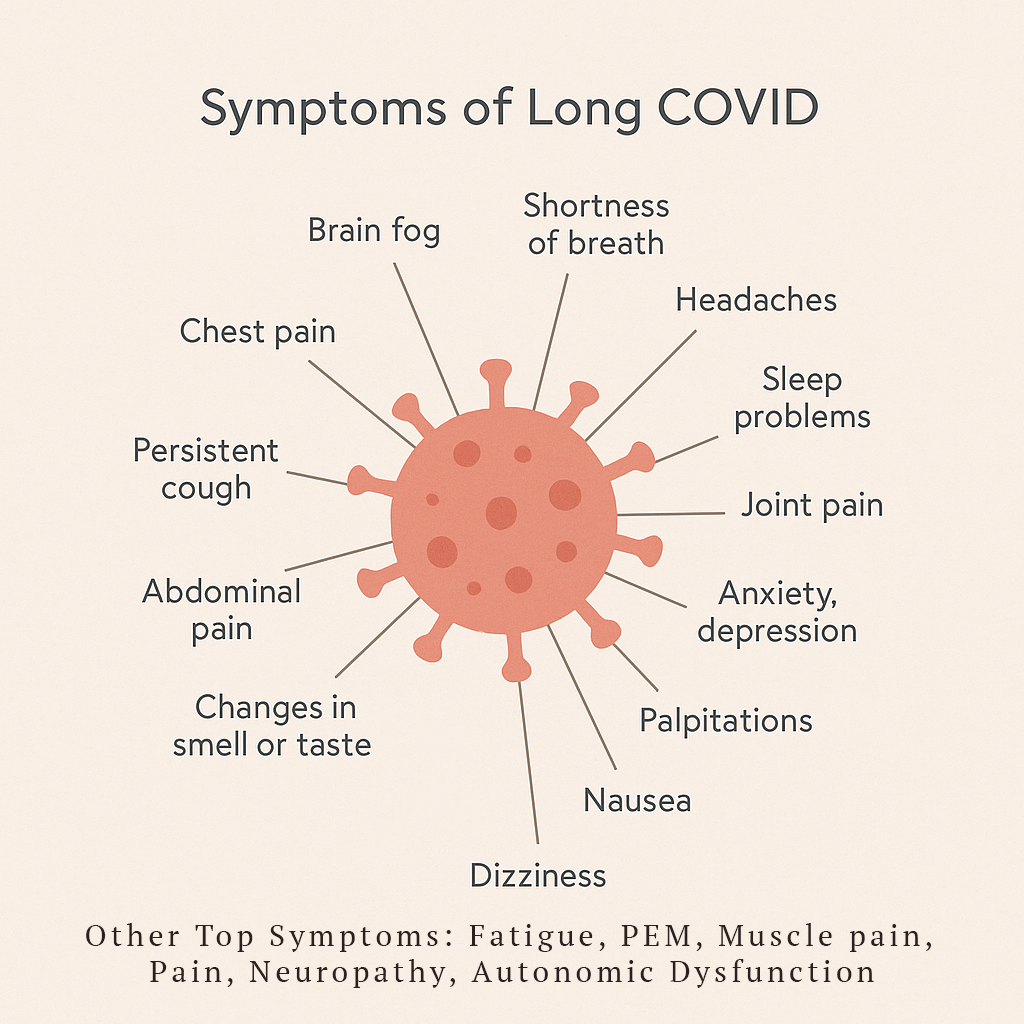
What is Long Covid?
Public-health bodies now define Long COVID as symptoms and/or new diagnoses present ≥3 months after a SARS-CoV-2 infection that can be continuous, relapsing-remitting, or progressive, affecting one or more organ systems. It can limit daily activities and qualify as a disability.
Common symptoms (not exhaustive): fatigue, brain fog, post-exertional malaise (PEM), breathlessness, chest pain, palpitations, sleep problems, GI symptoms, joint or muscle pain, sensory changes, mood changes, and more (200+ symptoms have been cataloged).
Long Covid
What Causes It?
Researchers like Akiko Iwasaki, Carmen Scheibenbogen, Rob Wüst, Resia Pretorius, Douglas Kell, Ron Davis, and others have proposed multiple overlapping mechanisms that may explain persistent symptoms. Long COVID likely isn’t a single disease, but rather a cluster of biological patterns that overlap or amplify each other.
1.
Immune Dysregulation & Autoimmunity
- Some patients show autoantibodies against receptors involved in circulation, metabolism, or the nervous system (e.g., β-adrenergic and muscarinic receptors).
- Persistent immune activation or immune exhaustion may continue even after the virus is gone.
- Researchers such as Carmen Scheibenbogen and Akiko Iwasaki are investigating these immune signatures.
2.
Viral Persistence
- Fragments of SARS-CoV-2 RNA or proteins have been detected months later in tissues like the gut, brain, and lymph nodes.
- This ongoing antigen presence could sustain inflammation or autoimmunity.
- Teams at Yale, Stanford, and NIH’s RECOVER project are studying this hypothesis.
3.
Microclots & Vascular Dysfunction
- Studies by Resia Pretorius, Doug Kell, David Smadja, and others show persistent fibrin(ogen) microclots that can trap inflammatory molecules and block oxygen delivery.
- These clots may explain fatigue, breathlessness, and “brain fog” via impaired microcirculation.
- Endothelial injury (“leaky vessels”) and platelet activation further worsen the cycle.
4.
Mitochondrial and Metabolic Dysfunction
- Rob Wüst and Ron Davis have found evidence of muscle mitochondrial inefficiency and impaired energy metabolism.
- This can lead to severe fatigue and post-exertional malaise.
- Reduced ATP production and poor oxygen extraction are central findings in some cohorts.
5.
Neuroinflammation and Autonomic Imbalance
- Some patients show signs of inflammation in brain regions linked to fatigue and cognition.
- Others experience dysautonomia (including POTS-like symptoms) due to immune or vascular signaling disruption.
- Researchers like Avindra Nath (NIH) and Michelle Monje (Stanford) are exploring these neural pathways.
6.
Endocrine, Microbiome, and Environmental Factors
- Hormonal imbalances (especially cortisol, thyroid, and sex hormones) can perpetuate fatigue or immune instability.
- Gut microbiome disruption may influence systemic inflammation and immune tone.
Environmental exposures — including mold, toxins, or poor air quality — may worsen symptoms or sustain immune activation, particularly in already-sensitized individuals.
Long Covid
Complicating Factors
While the biology above may form the foundation, various secondary or compounding factors may intensify symptoms, and some of these may also be primary in certain individuals:
- Mold or water-damaged building exposure, leading to chronic inflammatory responses (CIRS) or mycotoxin sensitivity.
- Environmental compounds such as lead, mercury, MTBE, Benzene, titanium dioxide, sodium laurel sulphate, pthalates, BPA, microplastics, and more
- Poor sleep quality and disrupted circadian rhythms.
- Nutritional deficiencies (vitamin D, B12, magnesium, zinc, iron, carnitine, or amino acids).
- Hormonal dysregulation, including adrenal, thyroid, or sex hormone imbalance.
- Undiagnosed mechanical or vascular compression (e.g., iliac vein compression, nutcracker syndrome, May–Thurner, thoracic outlet).
- Co-infections (e.g., EBV, CMV, Lyme) reactivating under immune stress.
- Persistent gut dysbiosis, histamine intolerance, or mast cell activation.
Long Covid
⚠️ Read this First: Medication Sensitivity and Mast Cell Considerations
Many people with chronic complex illnesses — including Long COVID, ME/CFS, and related immune-mediated conditions — are unusually sensitive to medications and supplements.
This section is science education only and not medical advice. Always discuss any new therapy with a qualified healthcare professional who understands post-viral illness and mast cell disorders.
🧬 Why Sensitivities Happen
- Chronic immune activation can prime mast cells (immune cells that release histamine, tryptase, and other mediators).
- These cells become hyper-responsive, reacting to even small chemical triggers such as new medications, foods, or environmental exposures.
- When mast cells are unstable, introducing new drugs — even low doses — can cause rashes, flushing, swelling, rapid heart rate, anxiety, or GI upset.
- Because of this, clinicians often recommend stabilizing mast cells before starting other therapies.
🌿 First-Line Mast Cell Support
H₁ Blockers (target histamine’s effects on skin, nerves, and vessels)
Common examples include:
- Cetirizine (Zyrtec)
- Loratadine (Claritin)
- Fexofenadine (Allegra)
- Diphenhydramine (Benadryl) — short-acting and sedating, often used at night
H₂ Blockers (reduce histamine activity in the stomach and sometimes systemic circulation)
Common examples include:
- Famotidine (Pepcid)
- Cimetidine (Tagamet)
Please note, because H2 blockers reduce stomach acid, they can cause digestive and stomach issues with long term use
🧩 Additional Mast Cell Stabilizing Options
(These should always be discussed with a clinician experienced in MCAS.)
- Cromolyn sodium (Gastrocrom) – prescription mast-cell stabilizer taken orally.
- Ketotifen – antihistamine with mast-cell-stabilizing properties (available by prescription or compounded).
- Quercetin, luteolin, and resveratrol – plant polyphenols shown in studies to help calm mast cells.
- Vitamin C – cofactor in histamine breakdown and mast-cell stabilization.
- Amlexanox – has anti-inflammatory and mast-cell-modulating effects (studied in metabolic and allergic contexts).
- Montelukast (Singulair) – leukotriene receptor blocker that can reduce mast-cell mediator effects in some patients. This one has a black box warning.
⚖️ Practical Guidance
- Start low and go slow. People with sensitivities often tolerate micro-doses first.
- Introduce only one new treatment at a time to track responses clearly.
- Support hydration, electrolytes, and gentle nutrition while stabilizing.
- Avoid unnecessary additives (dyes, flavorings, alcohol) that can provoke mast cells.
Once mast cells are calmer, broader treatments such as antivirals, vascular agents, or mitochondrial supports are often better tolerated.
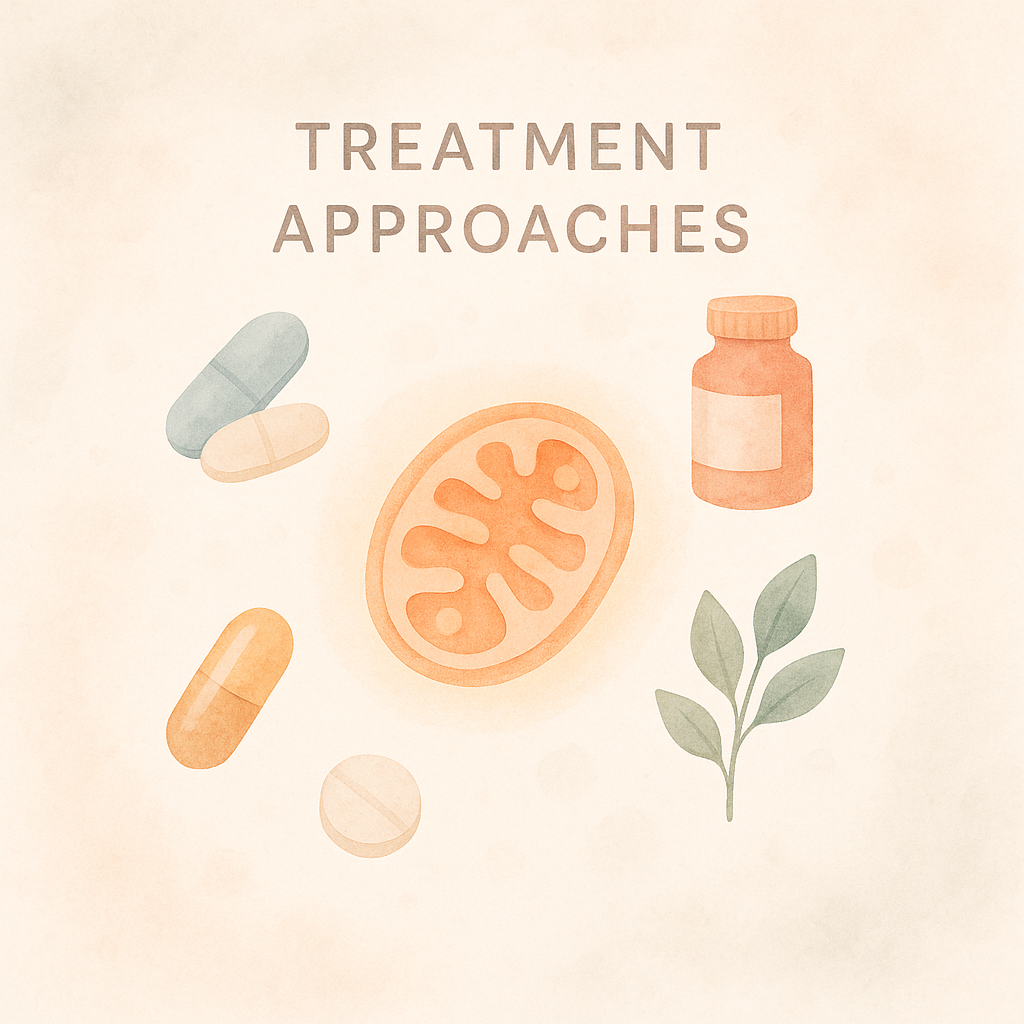
💊 Treatment Areas & Approaches to Discuss With a Doctor
⚠️ This section is science education only and not medical advice. Treatments should be evaluated and prescribed by qualified professionals based on individual history, labs, and contraindications.
1.
Vascular and Microclot Support
- Nattokinase, lumbrokinase, or Neprinol (systemic enzyme blends) – sometimes discussed for supporting fibrin breakdown.
- Low-dose aspirin or Eliquis (apixaban) – under supervision, may be used in some cases to reduce clotting risk.
- Sulodexide – a heparin-like compound studied for endothelial repair.
- Pentoxifylline – improves red blood cell flexibility and microcirculation.
- Pioglitazone and Amlexanox – have vascular and anti-inflammatory benefits under study.
- XFZY Pian (Xue Fu Zhu Yu Pian) – a traditional Chinese formula used in some microcirculation research contexts.
2.
Immune and Inflammatory Modulation
- Low Dose Naltrexone (LDN) – helps modulate microglial and immune activity; some patients report significant benefit.
- IVIG (intravenous immunoglobulin) – can rebalance autoimmune activity in select cases.
- Antihistamines and mast cell stabilizers – for those with histamine sensitivity or mast cell activation.
- Immunoadsorption or B-cell therapies – under study in Germany and other European centers for autoimmune Long COVID and ME/CFS.
3.
Antiviral and Antimicrobial Strategies
- Clinical trials and case reports are exploring antiviral combinations (e.g., Paxlovid, valacyclovir, famciclovir) in selected patients showing viral reactivation or persistence markers.
- Ongoing NIH RECOVER and private studies are testing these hypotheses.
4.
Metabolic and Mitochondrial Support
- Nutrients like CoQ10, carnitine, B-vitamins, alpha-lipoic acid, and magnesium may support energy metabolism.
- Targeted mitochondrial repair protocols are being explored in ME/CFS-overlapping clinics.
5.
Endocrine and Hormone Evaluation
- Hormone testing through labs or Dutch panels can identify deficiencies in cortisol, DHEA, estrogen, progesterone, or thyroid hormones.
- Correcting these imbalances may improve fatigue and immune stability.
6.
Microbiome and Gut Health
- Comprehensive stool analysis or functional medicine panels can detect dysbiosis, yeast overgrowth, or inflammatory markers.
- Treatment may include diet adjustments, probiotics, prebiotics, or antimicrobial protocols.
7.
Circulatory & Structural Factors
- Imaging for compression syndromes such as May–Thurner, Nutcracker, or thoracic outlet can be important when blood flow is impaired.
- Addressing these mechanical issues can reduce secondary inflammation and pain.
🌿 Other Supportive Considerations
- Gentle pacing and energy envelope management to avoid post-exertional crashes.
- Environmental cleanup (addressing mold or toxins if present).
- Anti-inflammatory nutrition, adequate hydration, and avoidance of alcohol and smoking.
- Gradual nervous system regulation approaches (vagal stimulation, breathwork, guided relaxation).
- Tracking lab results and journaling symptom patterns to help guide physician collaboration.
🕊️ Anti-Inflammatory Support (General & Targeted)
⚠️ This information is for science education purposes and not a substitute for medical advice.
Chronic inflammation can arise from ongoing immune activation, microclot formation, or tissue stress. Supporting anti-inflammatory pathways may help calm the system, reduce pain, and protect blood vessels and mitochondria. Patients can discuss these types of interventions with their healthcare provider:
1.
Pharmaceutical or Prescribed Options
- Low-dose naltrexone (LDN) – already noted above, also considered anti-inflammatory through microglial modulation.
- Colchicine – used in cardiovascular inflammation; some small studies are testing it in Long COVID.
- Corticosteroids – occasionally used short-term for severe inflammation, though not long-term in most cases.
- Pioglitazone, Amlexanox, and Pentoxifylline – have dual metabolic and anti-inflammatory actions.
- Montelukast – a leukotriene receptor blocker sometimes used in asthma, under study for Long COVID inflammation.
- Statins – beyond cholesterol effects, they have endothelial and anti-inflammatory benefits being evaluated in some trials.
2.
Natural or Nutraceutical Anti-Inflammatories
- Curcumin (turmeric extract) – reduces NF-κB activation and may help systemic inflammation.
- Omega-3 fatty acids (EPA/DHA) – promote pro-resolving lipid mediators that calm chronic immune activation.
- Quercetin, resveratrol, and green tea (EGCG) – polyphenols with antioxidant and mast-cell-stabilizing properties.
- Boswellia serrata and ginger – traditional anti-inflammatory botanicals.
- Vitamin C and Vitamin E – antioxidant support for oxidative stress.
- Alpha-lipoic acid – supports mitochondrial function and reduces reactive oxygen species.
3.
Lifestyle-Based Inflammation Reduction
- Anti-inflammatory diet: whole foods, omega-3-rich fats, colorful vegetables, limited processed sugars.
- Adequate sleep and stress regulation, since cytokine levels often rise with sleep loss and chronic stress.
- Gentle movement, within one’s energy envelope, to enhance lymphatic flow without triggering PEM.
- Environmental cleanup – minimizing mold, pollutants, and chemicals that can activate immune pathways.
4.
Investigational or Specialized Therapies
- Plasmapheresis / immunoadsorption – used in some European clinics for autoantibody and inflammatory mediator removal.
- Hyperbaric oxygen therapy (HBOT) – being studied for vascular and inflammatory recovery in Long COVID.
- Photobiomodulation (red-light / near-infrared therapy) – experimental but may modulate inflammation and mitochondria. Start much much lower than is typically recommended.
Long Covid
Finding Resources


Reputable guidance/clinics:
- CDC Long COVID (for patients & clinicians): definitions, symptom lists, clinical guidance.
- WHO factsheet: accessible overview and definition.
- NICE guideline (UK): practical work-up & management.
- NIH RECOVER: research updates and trial info.
Top Researchers (most have accounts on X):
- Akiko Iwasaki (Yale) – immune mechanisms & endotypes; co-leads Yale Long-COVID studies.
- Douglas Kell–University of Liverpool, microclots in Long Covid & amyloid clots in stroke
- Resia Pretorius (Stellenbosch University in South Africa)–Microclots, blood clotting abnormalities, fibrin / microvascular
- David Putrino (Mount Sinai) – autonomic dysfunction, rehab innovation.
- Ron Davis (Stanford University, USA) – Systems biologist originally known for the Human Genome Project; now heavily involved in ME/CFS and Long COVID biomarker research.
- Maureen Hanson (Cornell University, USA) – Studies metabolic and immune changes in ME/CFS and Long COVID patients.
- Lucinda Bateman (Bateman Horne Center, USA) – Clinical research on post-viral fatigue and treatment response.
- Ziyad Al-Aly (VA/WashU) – big-data outcomes and policy pieces.
- Rob Wüst–(Amsterdam UMC) – Muscle structure and metabolism.
- Karl J. M. Wirth (University of Osnabrück, Germany) – Studies energy metabolism and orthostatic intolerance in ME/CFS and Long COVID.
- Carmen Scheibenbogen – one of the most cited for autoantibody and immune dysregulation work.
Top Long Covid and ME/CFS Voices
- Dr. Claire Taylor, @drclairetaylor on X, drclairetaylor.com
- John Haughton MD, MS, @doc4care on X
- Bateman Horne Center, @BatemanHorne
- #MEAction Network, @MEActNet
- Rebecca Ryan, @DrRebeccaRyan
- Naomi Harvey PhD, @Naomi_D_Harvey on X
- Tom Kindlon @TomKindlon on X
- Dr.T, PhD, @chydorina on X
- Isabel Burnett, Renegade Research, @IsabelRamirezRD on X, renegade-research.org
- Tara Foti, @TaraFotiPhD
- PolyBio, @polybioRF
- Todd Davenport, @sunsopeningband
- Jack|amatica health, @JackHadfield14
- Todd Maderis, ND, @dr_todd on X
- Billy Hanlon, @bhanlon15
- Hillary Johnson Author, Journalist, @oslersweb
- Dr. Michael DACM, @internetuserf12
- Scott Daniska @scott_scientist on X
- Karen Leslie–Covid and ME Conscious PT, @karenphysiocuk on X, physio.co.uk
- Ciara Wright PhD, @Ciara Glenville
- Harriet Carroll, @angryhacademic
- Sabrina Poirier, @Sabrina_Poirier
- Dr. Gustavo Aguirre-Chang, @Aguirre1Gustavo
- Suzan Jackson, @livewithmecfs
- Vipin M. Vashishtha, @vipintukur
- Paul Keeble ME/LC, @PaulRKeeble
- Memorial ME Victims R.I.P., @MemorialME
- LIINC (UCSF: Steven Deeks, Michael Peluso) – long-term immune/virologic studies after COVID.
We also have an account discussing the science and my personal health journey. Follow on Twitter/X at @ZebraLoveCo.
Don’t give up hope. Follow these voices and scientists to learn about all of the exciting new research and treatments.
What Can I Do?
⚠️ This section is science education only and not medical advice. Treatments should be evaluated and prescribed by qualified professionals based on individual history, labs, and contraindications.
Write Your Story and History
Document when symptoms started, what flares them (especially post-exertional worsening), and what helps, and make a timeline.
Ask for basics
Vitals (including orthostatic vitals), ECG if palpitations/chest pain, pulse oximetry, targeted labs based on symptoms, and referrals (pulmonary, cardiology, neurology, autonomic clinics, integrative medicine) as appropriate.
Rehab carefully
Many do better with pacing/energy management when PEM is present; graded exercise can worsen PEM in some—seek Long-COVID-aware rehab. Pausing when exertion causes shortness of breath or pain, even every few or 30 seconds if needed, can prevent worsening. Many experts recommend “Start low and go slow.” PT may not be recommended in cases with PEM where it makes the patient worse instead of better.
find a long Covid Doctor
Look for an experienced doctor through the communities listed above
Thank you so much for taking the time to read this article. I hope it helps you better understand the complex science of Long COVID and gives you ideas you can discuss with your healthcare provider.
Author: Amanda Crist, B.A. in Zoology & B.S. in Science Education 7-12, Miami University of Ohio, Summa Cum Laude
Amanda brings a background in biological sciences and education, along with personal experience navigating chronic illness, to help translate medical and scientific research into understandable, practical information.
This resource was created with AI assistance to help organize current research and emerging hypotheses into a clear, accessible format for patients and caregivers.
This article is intended for informational purposes only and should not be taken as medical advice. Every individual’s situation is unique, and treatment decisions should always be made in consultation with qualified healthcare professionals.
0 Comments